Eleven areas of active research, one institutional voice.
Tap each programme to read about the questions we pursue, the methods we use, and the partners we work with. Our themes are interconnected because the problems we study refuse to stay within disciplinary boundaries.

Reading the changing weather of the Sahel
Climate research at TITDI engages the long Sahel to Mediterranean corridor as a single analytical landscape, recognising that environmental stress in northern Nigeria already speaks to displacement, food insecurity, and conflict patterns much further north. We build satellite driven early warning frameworks that translate remote sensing data into actionable signals for the communities and policymakers who live with the consequences of a warming planet first.
Our active work includes Sentinel 2 vegetation analysis across the Lokoja Benue Basin, exploratory work with synthetic aperture radar imagery, and a longer programme situating Nigeria within continental conversations on climate security. We pay particular attention to the gap between satellite inferred environmental change and the corporate or governmental disclosures meant to track it, because this gap is itself a governance question.
- Satellite based climate security early warning for the Sahel
- Vegetation and water stress analysis in the Niger Benue confluence
- Emission Disclosure Gap Index for accountability

Equitable learning pathways for Nigerian schools
Our education work begins from the premise that classrooms in Lokoja, Ankpa, and Dekina deserve the same intellectual seriousness as those in any other part of the world. We compare curricular traditions including Froebelian, Montessori, and the NERDC framework, examining how each engages children, how each shapes teacher confidence, and where each leaves gaps that more contextually rooted pedagogies could fill.
Beyond curriculum, we study vernacular civic education, gender disparities in classroom participation, and the practical infrastructures that allow North Central Nigerian schools to retain learners through transition years. We work directly with state education authorities and with the cooperative networks that quietly sustain rural schooling.
- Comparative Froebelian, Montessori, and NERDC curriculum study
- Vernacular civic education in Igala, Ebira, and Nupe
- Teacher confidence and retention research

Communicating, measuring, and improving health
TITDI partners with clinicians, public health researchers, and community health workers to advance health research that is methodologically careful and clinically useful. Our flagship programme on vernacular health communication treats indigenous languages as scientific infrastructure rather than ornamentation, recognising that the most rigorous biomedical guidance fails the moment it cannot be heard in the languages people actually live their lives in.
Active studies span primary healthcare referral delays for obstructive jaundice, vaccine confidence dynamics, climate sensitive sexual and reproductive health, and the construction of new measurement tools such as the Misinformation Risk Index and the Advocacy Efficiency Estimator. Our research collaborations are led by senior Nigerian clinicians whose primary commitment is to patients in the wards they serve.
- Vernacular health communication across indigenous languages
- Primary healthcare referral pathway studies
- Climate sensitive sexual and reproductive health

Building machines that respond to local demand
Robotics at TITDI is less about imported futurism and more about asking what kinds of machines actually answer to the productive realities of the communities we work with. Our programme couples hands on engineering education for Nigerian young people with applied research into appropriate automation for agriculture, light manufacturing, and educational settings, building competence rather than dependence.
We integrate robotics with our wider STEM and learning assessment work, ensuring that pupils encounter engineering not as an exotic specialty but as an extension of mathematical and scientific reasoning they have already begun to develop. Our partnerships extend to cybersecurity colleagues who think carefully about the security of autonomous systems from the design stage.
- Appropriate automation for smallholder contexts
- Robotics curriculum integration with secondary STEM
- Security informed design for autonomous systems

A field network of more than 37,000 households
Agricultural research at TITDI rests on something no policy paper can substitute for, namely a registered field network of more than thirty seven thousand smallholder farming households across the Niger Benue corridor. We work directly with cooperative societies in Ankpa, Dekina, and Okene LGAs on questions of soil health, irrigation, livestock integration, climate adaptation, and access to credit on terms that smallholders can sustainably absorb.
Our analysis of Nigeria's livestock sector through the lens of Sustainable Development Goal synergies, drawing on ACReSAL World Bank data, is one example of how field grounded primary evidence and continental policy frameworks can be made to inform each other. We pay equal attention to the political economy of subsidy reform and to the technical questions of yield, water, and pest management.
- Registered network of 37,000 plus smallholder households
- Livestock SDG synergies analysis
- Subsidy economics and energy ladder substitution research
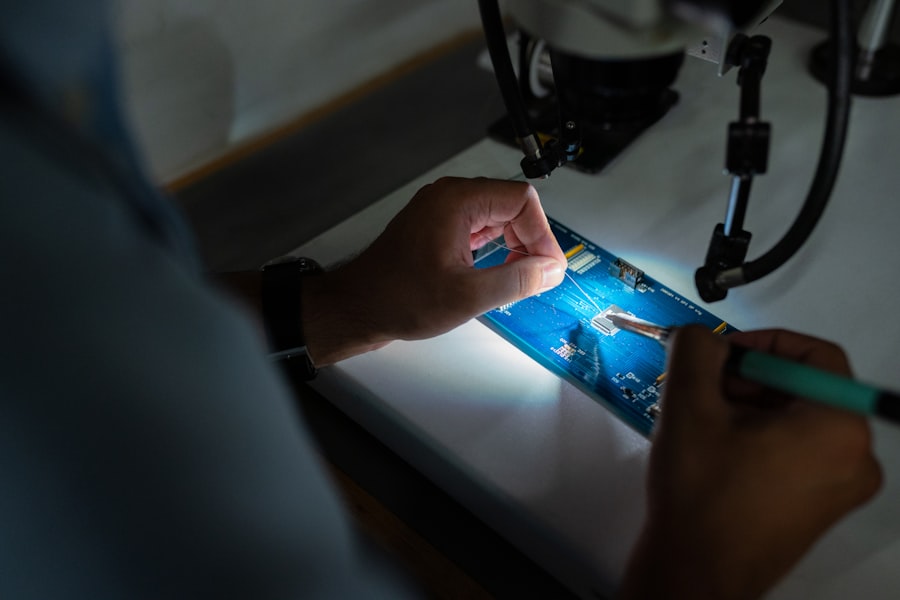
Closing the gap between aptitude and opportunity
Our STEM programme works on a basic injustice, namely that Nigerian young people consistently demonstrate aptitude for mathematics, computing, and the sciences while access to the conditions that turn aptitude into achievement remains uneven across geography, gender, and household income. We channel scholarship facilitation, mentorship infrastructure, and curriculum innovation toward closing that gap.
Particular emphasis falls on gender equity in mathematics and computing, where the talent gap reported by employers tracks far more closely with the pipeline gap created at secondary school than with any genuine difference in capability. Our work in this area connects directly to robotics, learning assessment, and infant education, because the conditions for STEM excellence are set early and reinforced everywhere.
- Scholarship facilitation for promising young scientists
- Gender focused mentorship in computing and mathematics
- Curriculum innovation in collaboration with state education authorities

Measurement instruments that hold systems accountable
Education systems are only as honest as the instruments they use to measure themselves. TITDI develops assessment frameworks that move beyond rote test scores into more textured measures of what learners actually know, can do, and can transfer to unfamiliar problems. Our CurriculAI framework, deployed across Kogi State secondary schools, is one such instrument, designed to evaluate curriculum coherence rather than only learner performance.
We treat measurement as a public good. Frameworks we build are documented openly, refined through practice, and offered to other state systems and partner institutions that want to know whether their educational investments are producing the outcomes their populations deserve. The work sits at the intersection of methodological rigour and democratic accountability.
- CurriculAI assessment framework deployed in Kogi State
- Open methods documentation for replication
- Cross system comparative measurement

The years that quietly decide everything
The early years of a child's life decide a great deal that is often only noticed later. Our infant education programme studies foundational learning for children aged five to eight across North Central Nigerian contexts, drawing on comparative Froebelian and Montessori traditions alongside the NERDC framework to inform pedagogy that respects how young children actually come to know the world.
This work runs in close conversation with our learning assessment programme, since the readiness signals we use at the start of primary school shape the developmental opportunities every subsequent year of schooling can offer. We collaborate with experienced Nigerian early years educators whose practical wisdom anchors the research in classroom realities.
- Comparative early years pedagogy for ages five to eight
- Readiness instruments for transition to primary
- Collaboration with experienced Nigerian early years educators

Festivals as living data
Cultural heritage is not a static archive to be preserved behind glass, it is a living, contested, generative practice. Through projects such as FESTEX Nigeria, supported under the UNESCO International Fund for Cultural Diversity framework, we build platforms that document, celebrate, and analytically value the traditional festivals of Kogi State as renewable cultural infrastructure.
Our approach treats festivals as economic, educational, and social systems whose data trails deserve the same seriousness extended to any other sector. The result is a programme that supports cultural custodians, enriches state planning, and offers researchers across Africa a methodologically robust template for taking culture seriously as a domain of measurable public value.
- FESTEX Nigeria festival data exchange platform
- Cultural economy and heritage planning support
- Open methodology for festival data studies

The road not taken, and the systems that watch it
Our migration programme studies trans Mediterranean displacement as a political economy rather than a humanitarian afterthought. We examine surveillance capitalism along migrant routes, the proliferation of digital and biometric border technologies, and the cybersecurity vulnerabilities embedded in the migrant facing systems that purport to keep people safe while frequently doing the opposite.
An ongoing strand of work addresses the Mediterranean crisis through the framing of the road not taken, attending to the choices, infrastructures, and technologies that quietly produced the present moment. The programme is built on the conviction that better migration governance begins with honest documentation of how the current architecture actually works.
- Surveillance capitalism along trans Mediterranean routes
- Cybersecurity assessment for migrant facing technologies
- Political economy analysis of digital border infrastructure

AI governance from a Global South vantage point
TITDI is among the few Nigerian research institutions engaging AI governance seriously from a Global South vantage point. Our work introduces frameworks that move the conversation past commentary into measurement, including the Policy Externality Gap, the Data Value Retention Index, and the Data Decolonisation Toolkit, each designed to make legible the structural asymmetries that current AI governance discourses tend to leave undisclosed.
We pair this conceptual work with applied research on biopolitical AI startups, Nigerian data sovereignty, agentic AI accountability, and the observability of AI agent memory graphs. Across these strands the question is consistent, namely how the African public interest is technically encoded in the systems being built around us, and what it would take to encode it more honestly.
- Policy Externality Gap, DVRI, and DDT frameworks
- Agentic AI accountability and observability research
- Nigerian data sovereignty case studies